Intervertebral Disc Testing

Biomedical Testing » Orthopedics

Intervertebral Disc Testing

The Challenge

Intervertebral Disc

Intervertebral disc replacement is a surgical technique for the treatment of lower back pain related to degenerative disc disease. The advantage of this technique over traditional spinal fusion is that it preserves or restores motion in the spine, and has the potential to delay the onset of degeneration of healthy discs at adjacent levels in the spine. Disc prostheses are designed to be load bearing over the physiological range of disc motion, and to give years of pain-free and trouble-free operation in the body. Understanding the static and dynamic characteristics of a particular device allows manufacturers and designers to ensure their product is proven and accepted. ASTM F2346 provides a methodology for characterizing the static strength and dynamic fatigue behavior of disc prostheses. The rigorous testing regimes in this standard aim to scientifically validate any prosthesis design. With a typical test run lasting for 10 million cycles and requiring both axial and torsional loading, it is vital that a testing system copes with these performance demands and delivers the highest quality of results. In addition, the requirement to conduct these tests in a wet environment adds to the complexity of the system.

Our Solution 

Intervertebral Disc Testing

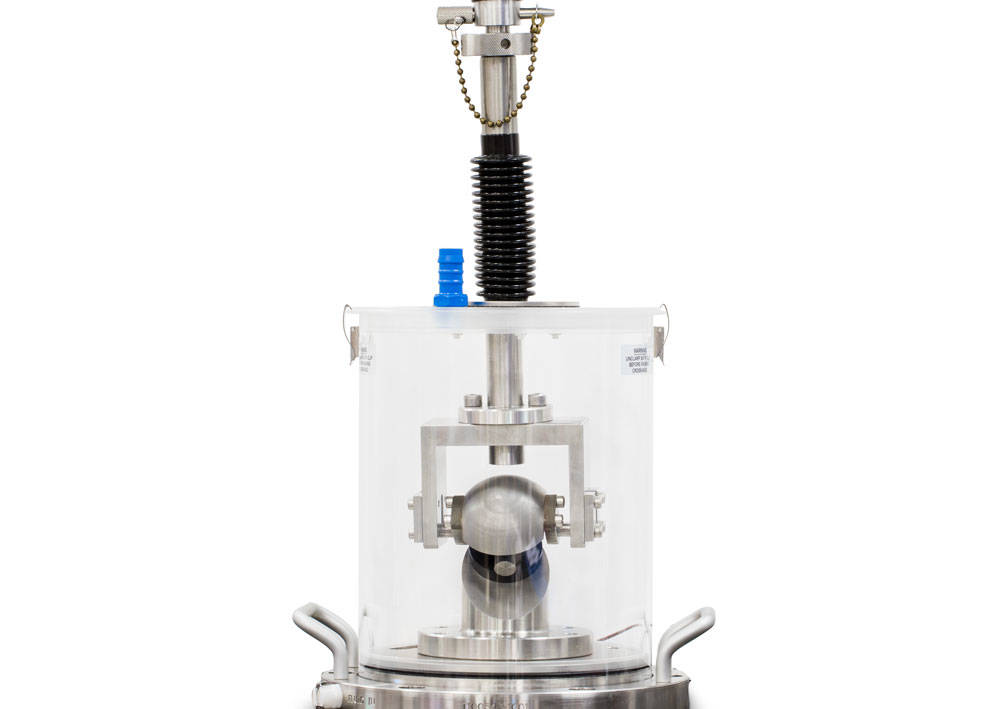
An 8874 axial-torsional system, with the addition of a temperature controller and re-circulator unit, allows device manufacturers and contract research laboratories to conduct both static and cyclic testing on a range of implant designs. The bath, in which saline flow and temperature are controlled, provides a stable environment. With the use of specialized test fixtures, the 8874 system's combined axial-torsional actuator allows for characterization to be conducted in axial compression, compression-shear, and compression-torsion test modes for both articulating discs of traditional metal-on-metal or metal-on-polyethylene design. It's also used for the next generation of prostheses, which feature an elastomeric component to give axial compliance under load that mimic the biomechanics of the natural disc.

膝关节测试


Biomedical Testing
»
Orthopedics


膝关节测试

挑战

膝关节

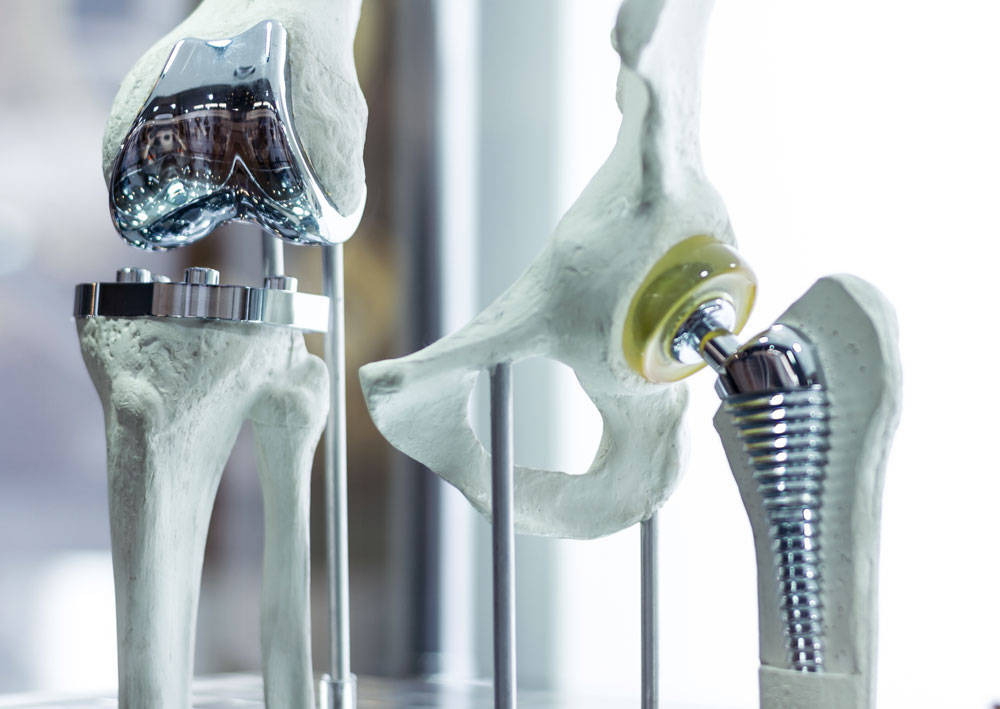
膝关节置换术是全球范围内旨在提高生活质量的最主要手术之一。膝关节胫骨托的疲劳断裂是全膝关节置换术 (TKR) 中最常见的失效机制之一。这是由于磨损引起的骨溶解等生物反应导致底层骨支撑丧失所致。在这些条件下,胫骨托在机械上变得不稳定,正常行走产生的循环载荷会导致疲劳裂纹,最终导致灾难性的失效。

我们的解决方案

膝关节测试

ElectroPuls™ 全电动动态测试仪器可协助设计人员、制造商和研究人员完成整个产品生命周期过程,从推导材料的基本特性(如抗疲劳裂纹扩展能力),到测试整个胫骨托及其他组件。我们使用夹具固定胫骨托的一半,模拟完全支撑的髁部。然后对另一侧未支撑的髁部施加具有生理代表性的载荷。通过使用我们独特的 Dynacell™ 载荷传感器,可以消除由夹具引起的动态惯性误差,以及在环境浴中测试时产生的流体动力学误差。这可以更准确地测量施加在试样上的载荷。

髋关节植入物测试


Biomedical Testing
»
Orthopedics


髋关节植入物测试

挑战

髋关节植入物

手术后,正常活动可能导致近端松动和应力遮蔽,并可能导致异常的载荷分布。因此,测试中需要模拟试样在体内所经历的真实环境和载荷。由于精确嵌入试样的重要性,髋关节股骨疲劳测试可能具有挑战性。夹具需要能够承受压缩、弯曲和扭转应力,以符合 ISO 7206 标准。这些测试的高频率也带来了挑战,因为它们可能导致试样升温超过可接受的限度。

我们的解决方案

髋关节植入物测试

Instron® 提供了一种试样嵌入装置,可确保达到所需的偏移角度和嵌入深度。专用的耐腐蚀夹具允许进行体内测试。该组件配有温度控制器和循环泵,通过自动降低测试频率,确保温度永远不会超过可接受的限度。这种易于安装的夹具包括一个低摩擦加载头和用于将其安装到 ElectroPuls™ 系统的适配器。Instron WaveMatrix™ 软件允许使用多种测试结束标准,例如运行特定的循环次数或直到检测到试样失效(可通过多种方式确定)。通过这一套件,您可以放心地进行测试,并达到或超过 ISO 7206-4、7206-6 和 7206-8 的要求。

Bone Screw Testing

Biomedical Testing » Orthopedics

Bone Screw Testing

The  Challenge

Bone Screw

Bone screws are used in surgical procedures for securing implants, osteosynthesis devices, and fracture fixation plates to the skeletal system. In normal clinical use, a surgeon applies combined axial and torsional forces to the bone screw as it is implanted within the body. Manufacturers and scientists test bone screws to determine various mechanical properties when evaluating new materials and designs. The most common standard for testing bone screws is ASTM F534. The standard consists of a total of four testing annexes: axial tests, torsion only tests, or a combination of both linear and torsion tests. ASTM F543-17 Test A1 - Test Method for Determining the Torsional Properties of Metallic Bone Screws requires the screw to be sufficiently clamped and a rotational velocity between 1 and 5 rpm to be applied until specimen failure, and to measure the torque profile and the rotational angle. ASTM F534-17 Test A2 - Test Method for Driving Torque of Medical Bone Screws measures the torque required to insert and remove the screw with a constant rotational velocity between 1 and 5 rpm while maintaining an axial load of no more than 10 N in compression. ASTM F543-17 Test A3 - Test Method for Determining the Axial Pull-Out Strength of Medical Bone Screws measures the force required to axially remove the screw that has been fully inserted in the test block using the method from Test A2. The pull-out fixture then applies a tensile load at a constant rate of 5 mm/min until the failure of the bone screw or removal from the test block. ASTM F543-17 Test A4 - Test Method for Determining the Self-Tapping Performance of Self-Tapping Medical Bone Screws specifies the procedure to evaluate the axial loading required to engage a self-tapping bone screw into a standard laboratory material. Although considered a simple clinical procedure, reproduction of this in vitro results in a relatively complex motion due to the interaction between the rotation and linear axes of a test machine. The test requires a continuous rotational velocity of up to 30 rpm while the axial load is incremented during the insertion at a rate of 2 N/s. The objective of this test is to record the torque profile as the bone screw is inserted into the material and then removed.

Our Solution 

Bone Screw Testing

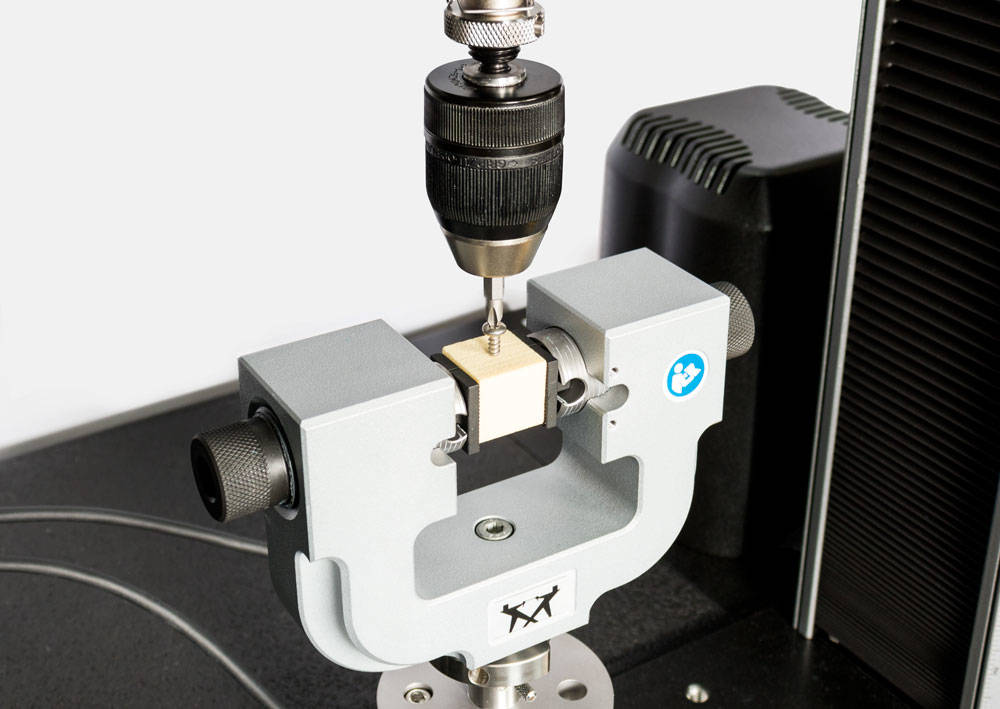
To perform bone screw testing to ASTM F543, either an electromechanical system with a Torsion Add-On 3.0 , or an ElectroPuls™ Linear-Torsion system can be used. The Torsion Add-On 3.0 can be added to any new or existing 6800 Series single column or dual column table top testing machine to add rotational capabilities. The ElectroPuls E10000 and E3000 Linear-Torsion test systems are all-electric dynamic testing systems that provide a unique linear and torsion actuator system that is capable of synchronized linear and multi-rotation testing, which makes them ideal platforms for performing the full range of tests prescribed by the standard. For both the electromechanical system and ElectroPuls system, a bi-axial Dynacell load cell is mounted to the base of the machine. Using WaveMatrix™ dynamic test software on the ElectroPuls system, a user is able to control both axial and rotational axis in closed-loop control. This gives the user the ability to easily set up the multi-axial tests as a series of steps, and displays the required information as the test proceeds. Special fixtures are used to clamp the material to the biaxial load cell, and a drill chuck is used for the drive bits.

骨折固定装置测试


Biomedical Testing
»
Orthopedics


骨折固定装置测试

挑战

骨折固定

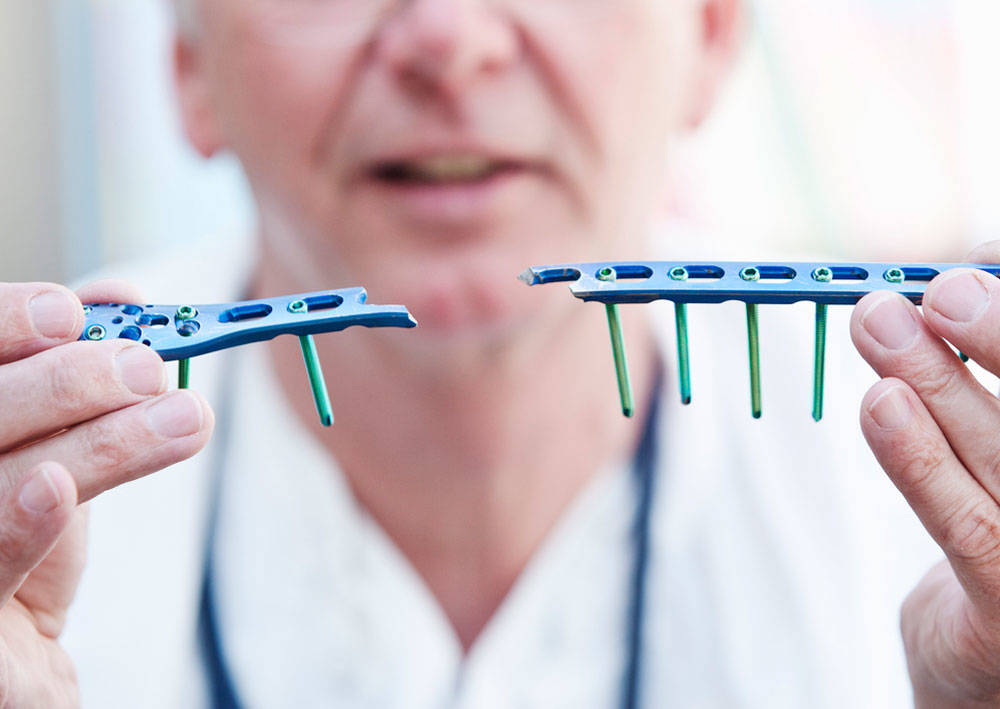
骨折固定板用于固定骨折或严重断裂的骨骼。这些固定板通常由钛或不锈钢制成。这两种材料都具有与原生骨骼相似的机械性能,包括刚度和极限抗拉强度。这些固定板通常具有不规则的几何形状,并有多种尺寸,以适应体内不同部位的骨折。例如,用于固定股骨骨折的固定板与用于脚踝、手指或下颌的固定板截然不同。骨折固定板不规则的几何形状和尺寸范围使其成为具有挑战性的测试组件。此外,在大多数情况下,这些固定板会终身留在患者体内,必须能够承受人体数十年间的动态运动。

我们的解决方案

骨折固定装置测试

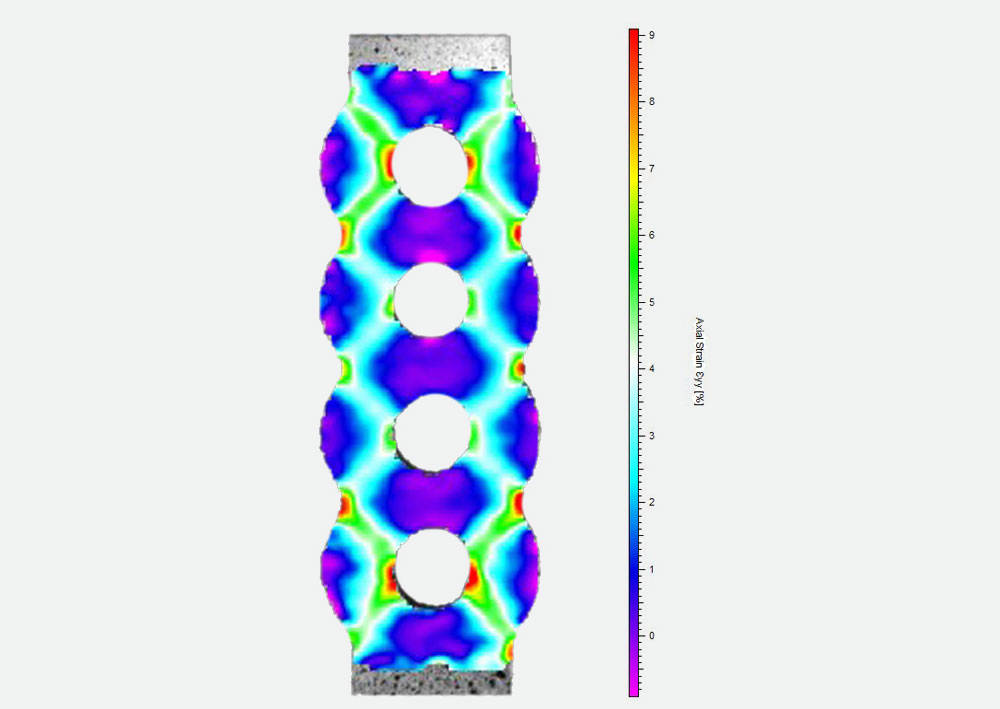
为了了解骨折固定板的机械性能,需要进行一系列静态和动态测试。单向弯曲、拉伸和压缩测试对于了解模量和极限抗拉强度是必不可少的。鉴于骨折固定板不规则的几何形状,测量应变是一项挑战。通常采用有限元分析等 2D 和 3D 建模技术来了解骨折固定板的全场应力和应变特性。对于单向拉伸、压缩或弯曲测试,我们的 数字图像相关 软件配合 高级视频引伸计,可让研究人员和科学家对这些固定板的全场应变特性进行可视化和量化。对于所有疲劳测试,我们建议使用我们的 ElectroPuls™ 系统。具体而言,我们推荐 E3000 或 E10000 Linear-Torsion 测试系统。同时在轴向载荷和扭转载荷下测试固定板的能力,最能代表人体内的真实受载情况。

脊柱植入物测试


Biomedical Testing
»
Orthopedics


脊柱植入物测试

挑战

脊柱植入物测试

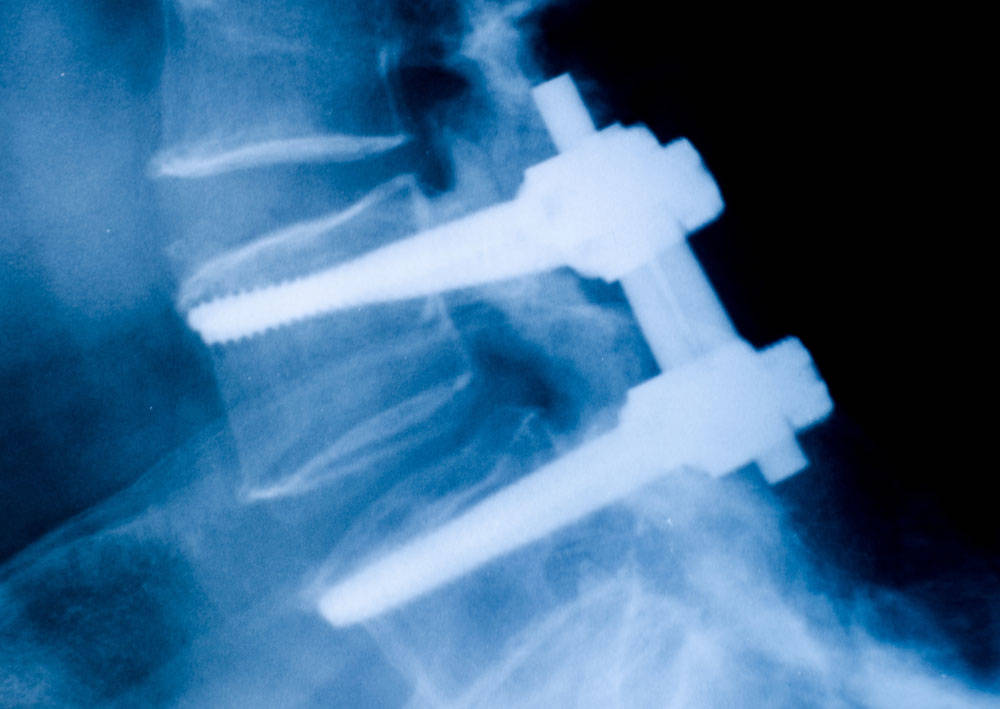
脊柱构造的使用寿命测试至关重要,因为疲劳失效比灾难性失效更为常见。在患者的正常活动中,脊柱构造可能会承受较高的体内载荷,从而导致灾难性失效。进行循环测试是为了评估发生疲劳失效所需的循环次数。载荷通常采用恒定振幅的载荷控制正弦波形,运行次数超过 500 万次。此外,还会进行简单的静态测试,以评估导致脊柱骨折所需的载荷。

我们的解决方案

脊柱植入物测试

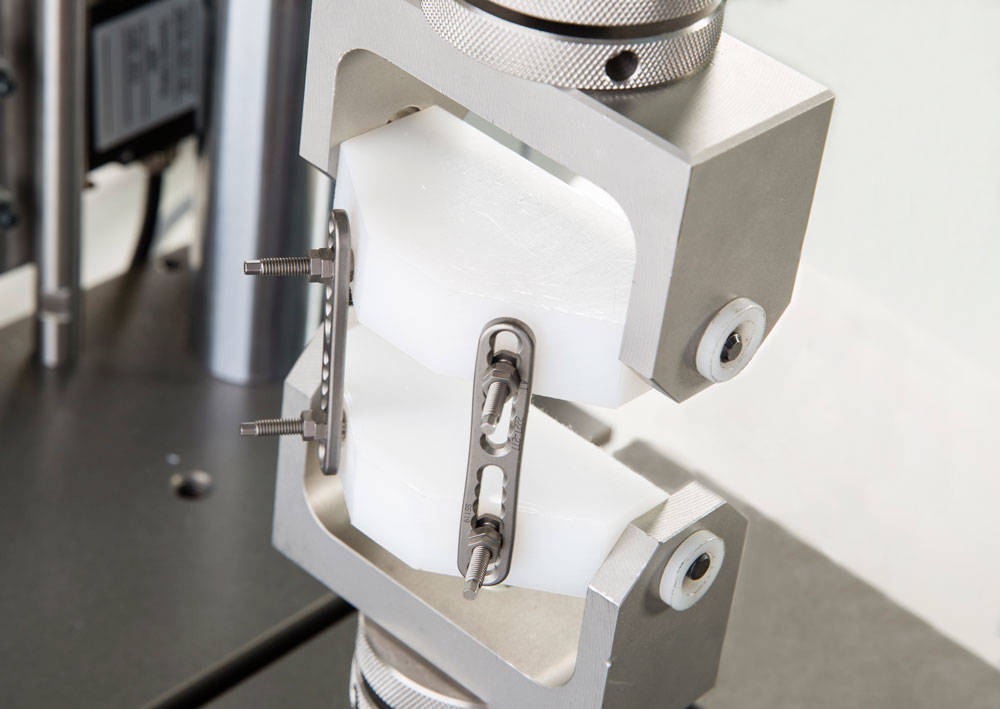
推荐使用 Instron® 线性扭转 ElectroPuls™ 系统,因为它允许用户在单台机器上根据 ASTM F1717-12 标准完成静态和动态测试。专用脊柱夹具可以轻松安装到该系统上,并可选择在底座上安装盐水浴槽进行体内测试。使用浴槽时,载荷传感器设计为安装在作动缸上,并利用 Instron 专利的 Dynacell 技术进行惯性补偿。Instron 专利的基于刚度的调谐算法可确保出色的波形保真度,即使对于非线性试样也是如此。