

毛细管流变仪
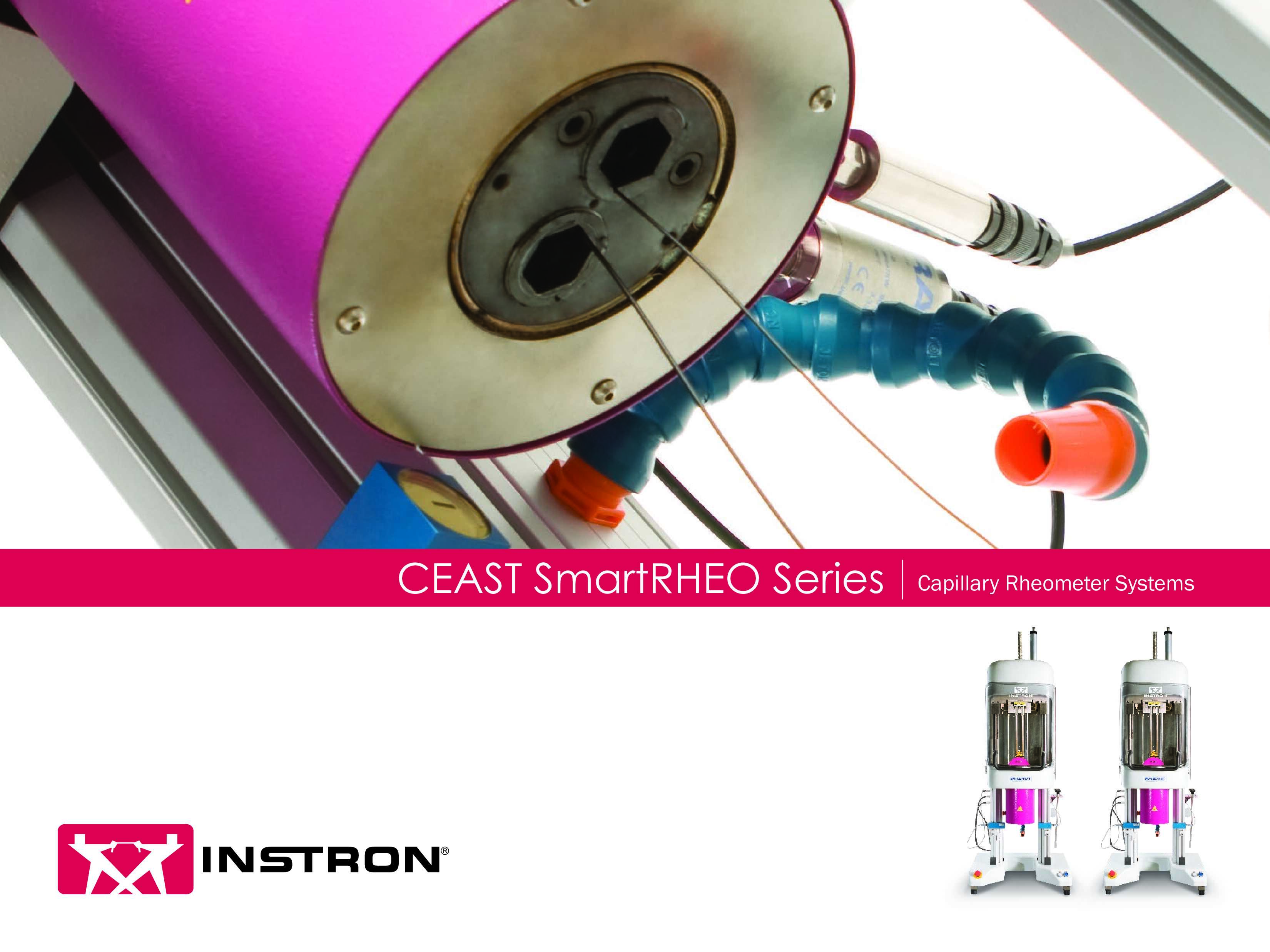
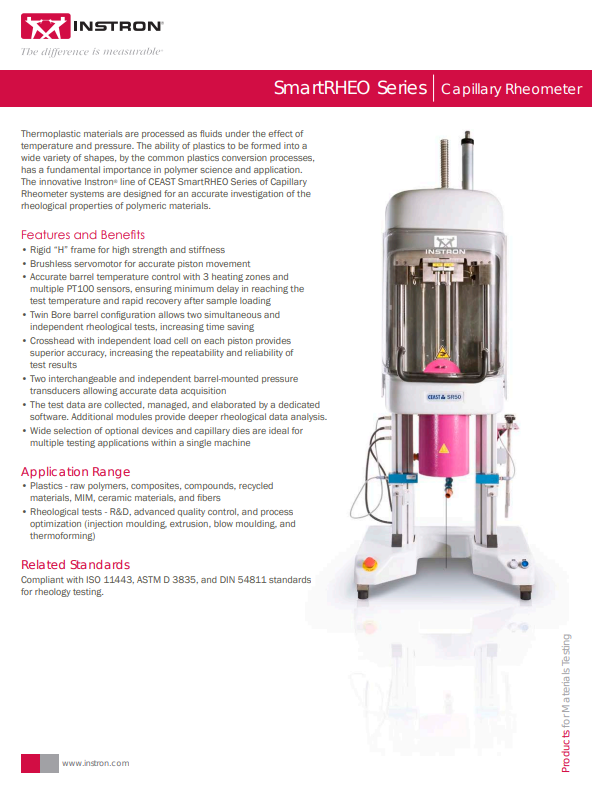
毛细管流变仪是一种用于测量剪切粘度和其它流变(=流动)特性的仪器。用于塑料的毛细管流变仪是活塞-模具系统,旨在测量聚合物熔体的粘度,该粘度是温度和形变速率的函数。它们能够测试基本聚合物、化合物、具有小增强颗粒或纤维的各种复合材料、金属注射成型的原料以及类似材料。
基本原理是,热塑性样品(最初为颗粒、粉末或薄片状)通过加热而变成流体,并被迫从圆柱体中通过毛细管模具流出。测量的量通常是在稳态条件下产生的压力。流动曲线是典型的输出,通过对几个实验数据进行插值获得。粘度用希腊字母“eta”(η)表示,并以帕斯卡秒(Pa·s)或牛顿秒/平方米(N·s/m2)(SI 单位)表示。
毛细管流变仪可确保测试条件能够真正代表加工条件,特别是对于诸如注射成型之类的高压和高速技术,因此它们是工艺优化的关键。
可以从毛细管流变仪数据中测量或估计的其它流变特性包括拉伸粘度、挤出物溶胀、热稳定性、壁滑。可以进行辅助测量,以测量热导率、密度对压力和温度的依赖性 (pvT)、熔体强度。
参考文献
- Walters K. “流变学”,Chapman & Hall(1975)
- Ferry, J. D. “聚合物的粘弹性”,John Wiley & Sons(1980)
- Dealy, J.M. 和 Wissbrun K.F. “熔体流变学及其在塑料加工中的作用”,Van Nostrand Reinhold(1990),Chapman & Hall(1995)
- Macosko C.W. “流变学——原理、测量和应用”,Wiley-VCH(1994)
- Malkin A.Y. “流变学——概念、方法与应用”,ChemTec Publishing(2006)
VisualRHEO | Software for CEAST SR Series Capillary Rheometers
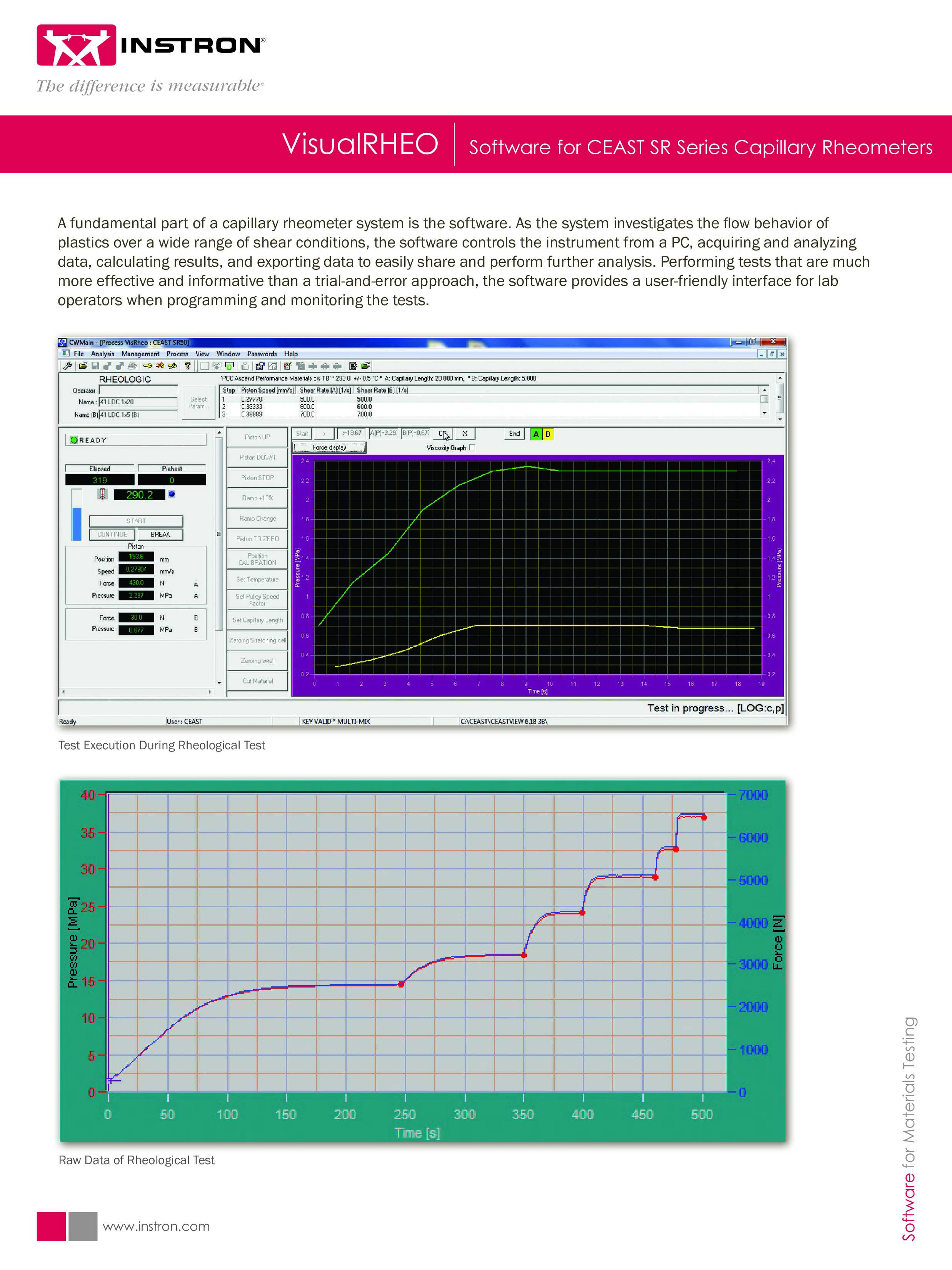
A fundamental part of a capillary rheometer system is the software. As the system investigates the flow behavior of
plastics over a wide range of shear conditions, the software controls the instrument from a PC, acquiring and analyzing
data, calculating results, and exporting data to easily share and perform further analysis. Performing tests that are much
more effective and informative than a trial-and-error approach, the software provides a user-friendly interface for lab
operators when programming and monitoring the tests.